Heating costs account for a significant portion of monthly expenses in many households. Especially in the cold winter months, inefficient use of heating can cause high costs. However, there are numerous ways to save on heating costs without having to give up comfort. In this article, we look at various strategies, including optimal room temperatures, the use of electronic radiator thermostats, the use of fans, special tips for rental apartments, the proper handling of underfloor heating, and efficient ventilation to save on heating costs.
The Optimal Room Temperatures: Comfortable Climate for Every Room
The right room temperature contributes significantly to well-being and health. It affects not only our feeling of comfort but also our performance and energy consumption. But what temperatures are ideal for different rooms in an apartment or a house?
Recommended Room Temperatures by Room
- Living room: 20–22 °C
- The living room is the central room where you can relax or receive guests. A temperature between 20 and 22 degrees Celsius provides a comfortable atmosphere.
- Bedroom: 16–18 °C
- For restful sleep, the bedroom should be kept relatively cool. Temperatures between 16 and 18 degrees Celsius are ideal, as they improve sleep quality and prevent overheating.
- Kitchen: 18–20 °C
- In the kitchen, a temperature of 18 to 20 degrees Celsius is sufficient, as additional heat is produced through cooking and baking.
- Bathroom: 22–24 °C
- The bathroom should be warmer than other rooms to avoid getting cold after showering or bathing. Temperatures between 22 and 24 degrees Celsius are ideal.
- Study: 20–22 °C
- For focused work, temperatures between 20 and 22 degrees Celsius are optimal. Rooms that are too warm or too cold can negatively affect concentration and productivity.
- Hallway: 15–18 °C
- Since people usually only stay briefly in the hallway, a temperature between 15 and 18 degrees Celsius is sufficient. This can save energy.
When considering optimal room temperatures, it should be noted that each degree lower can save about 6% on heating costs. Therefore, it is worthwhile to consciously adjust the temperature and not set it unnecessarily high. The right room temperature is an essential factor for comfort, health, and energy efficiency. Those who adhere to the recommended values and heat consciously can not only increase their well-being but also save on heating costs and protect the environment.
Anyone who has installed or is considering installing a smart home system in their house or rented apartment can use smart thermometers to measure the room temperature and monitor the temperature range. Some models, such as the Homematic IP Smart Home Wall Thermostat, also measure humidity. The advantage of this is that potential mold formation due to high humidity can be effectively prevented. While a low room temperature saves on heating costs, it also promotes mold growth.
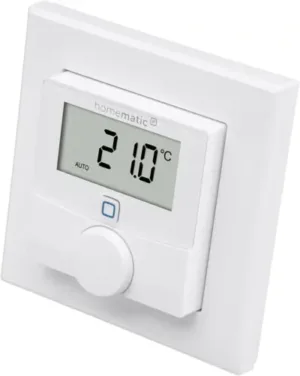
Homematic IP Smart Home Wall Thermostat with Humidity Sensor
Digital Thermostat Radiator/Floor Heating with App, Alexa, Google Assistant, Temperature Measurement, Energy Saving
Using Electronic Radiator Controllers – Save Energy and Increase Comfort
Modern electronic radiator thermostats offer an intelligent way to efficiently control room temperature. Unlike conventional thermostats, they allow precise temperature regulation and can be individually programmed. For example, heating output can be automatically reduced when no one is at home or lowered at night to save energy.
A key advantage of this technology is the possibility of time-controlled temperature regulation. Users can set specific heating times for each room, so that, for example, the bathroom is pleasantly warm in the morning, while no unnecessary energy is consumed in unused rooms.
In addition, many smart radiator thermostats offer app control via smartphone, tablet, or smartwatch. This allows you to adjust the heating while on the go, for example, if you come home earlier than planned. Some models are even compatible with smart home systems such as Amazon Alexa, Google Assistant, or Apple HomeKit, enabling convenient voice control.
In addition to increased living comfort, the use of electronic radiator controllers also ensures a significant reduction in energy consumption and heating costs. By targeted and efficient heating, heating costs can be saved – a great advantage both for the wallet and for the environment.
Homematic IP reports a heating cost saving of 33% when using smart radiator thermostats if they are used in combination with window and door contacts. This also depends on personal heating behavior. Various reference projects are presented, in which the heating cost savings are demonstrated.
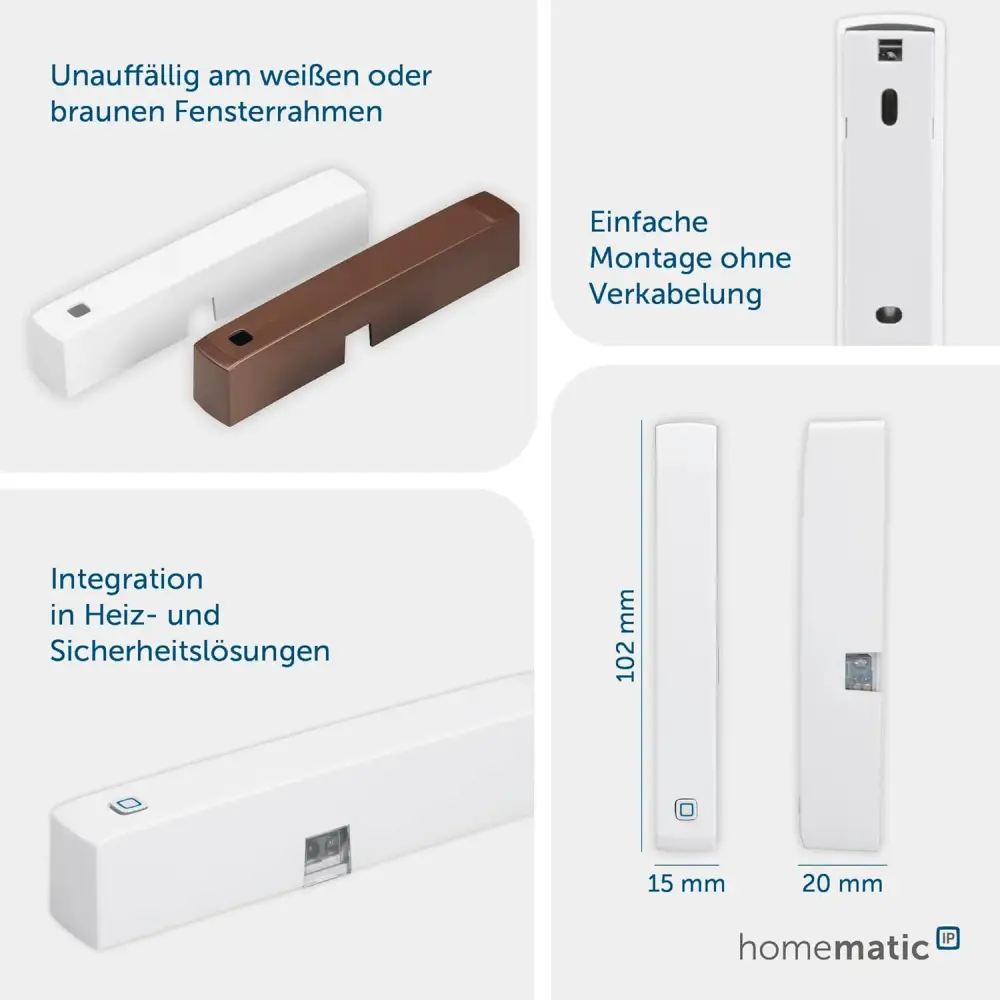
Homematic IP Smart Home Window and Door Contact
visual, white + brown cover, digital sensor, efficient heating, window monitoring via app, save energy, Alexa, Google Assistant
For getting started in the world of electronic radiator thermostats, we recommend the Homematic IP Smart Home Radiator Thermostat – Basic. According to the RRP, it costs 29.95 EUR, making it the best value for money. The smart radiator thermostat can be used as a standalone device without a central unit. In combination with a Homematic IP Access Point, control via the Homematic IP app is also possible.
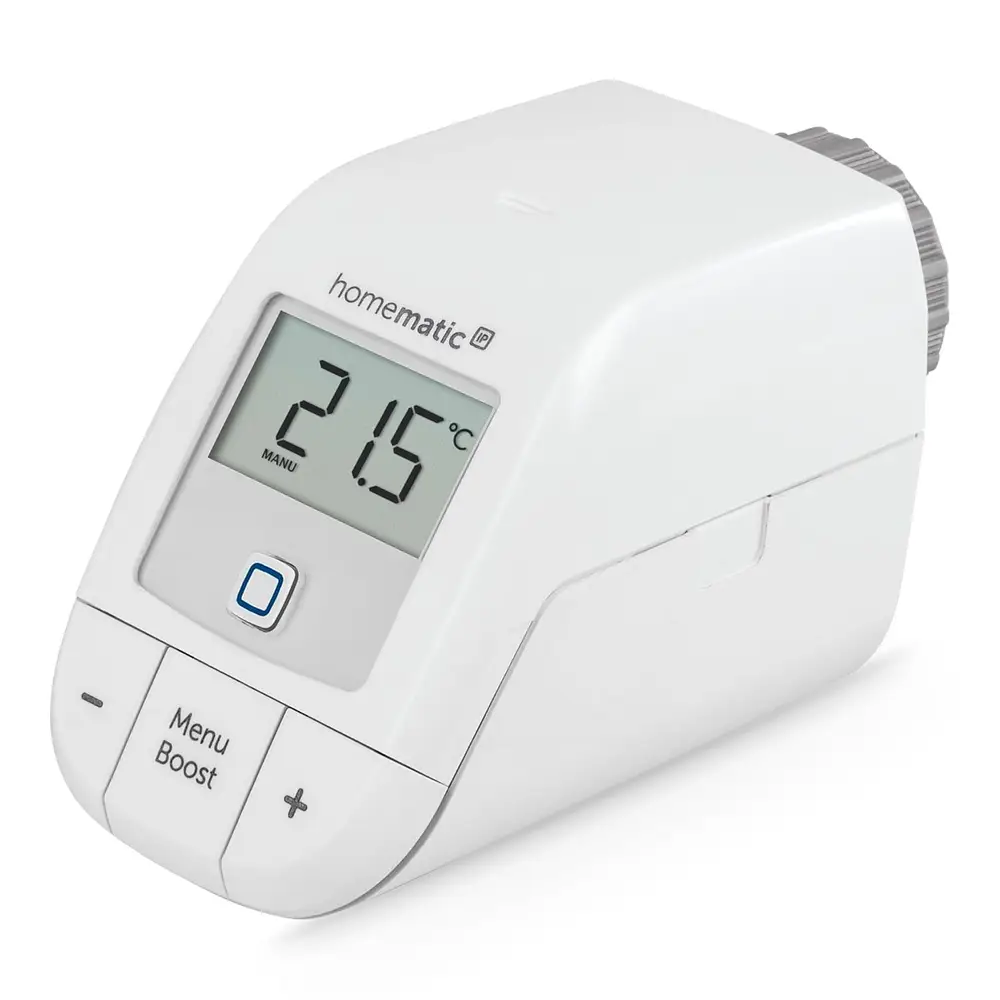
Homematic IP Smart Home Radiator Thermostat – Basic
digital heating thermostat, control via app, Alexa, Google Assistant, easy installation, save energy
Fans for Better Heat Distribution
Ceiling or room fans are often associated with a cooling effect in summer, but they can also make a valuable contribution to energy savings in the cold months. During the heating period, warm air tends to rise and accumulate under the ceiling. This causes cooler air layers to remain near the floor, while the desired heat goes unused.
A ceiling fan or a small room fan can help to distribute warm air more evenly throughout the room. Through gentle air circulation, the heat is pushed down from the ceiling and reaches the lower areas of the room, where it is actually needed. This can improve the subjective perception of warmth, which in turn allows the heating to be set slightly lower without sacrificing comfort. This leads to a reduction in heating costs while also lowering energy consumption.
Radiator fans are an even more efficient way to distribute heat optimally in the room. They are attached directly to the radiator and ensure that the heated air is distributed more quickly and evenly throughout the room. This allows the heating performance to be used more efficiently, which not only creates a more comfortable room climate but also reduces energy consumption.
But how much can actually be saved by using radiator fans? In a long-term test by GIGA, a heating cost saving of approximately 15% over 12 months was determined.
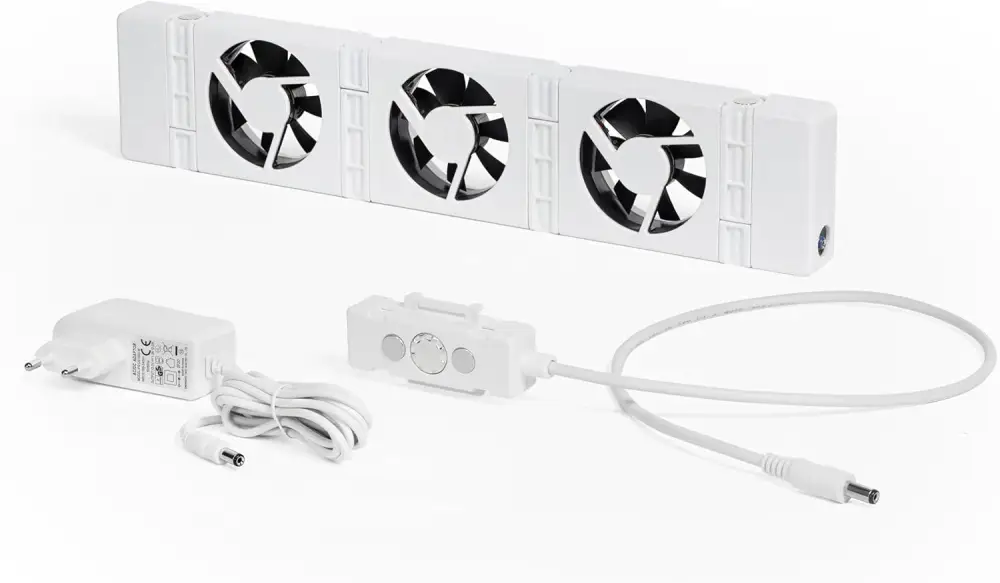
SpeedComfort Radiator Fan Mono Set
1 piece radiator fan – energy-efficient heating fan
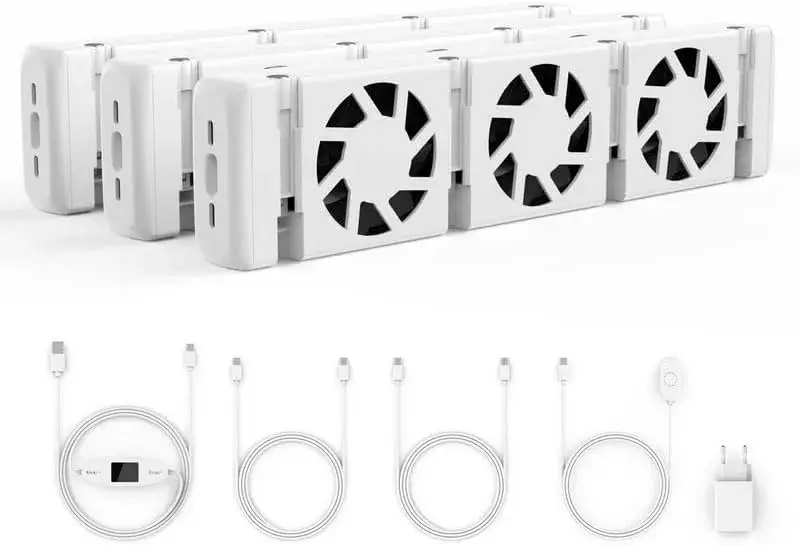
Smarter Heating Fan
for heaters and underfloor heating, durable radiator booster to increase heating efficiency
Conclusion
Heating costs can be significantly reduced through conscious use and modern technology. Even small adjustments, such as lowering the room temperature or proper ventilation, can bring noticeable savings. In particular, the use of electronic radiator thermostats, targeted use of fans, and efficient handling of underfloor heating offer great saving potential. Those who follow these tips can reduce energy consumption while maintaining living comfort at the same time.
Source/Photo: (Homematic IP / Amazon / Image Generator)

Ich bin Christian und habe den Blog 2024 gegründet. Ich bin gelernter Kommunikationselektroniker, technikbegeistert und Smart-Home-Enthusiast mit langjähriger Erfahrung im Bereich vernetzter Haushaltsgeräte. Mit großer Leidenschaft verfolge ich aktuelle Entwicklungen und teste regelmäßig neue Produkte, um verständliche Einblicke und praxisnahe Empfehlungen zu geben.