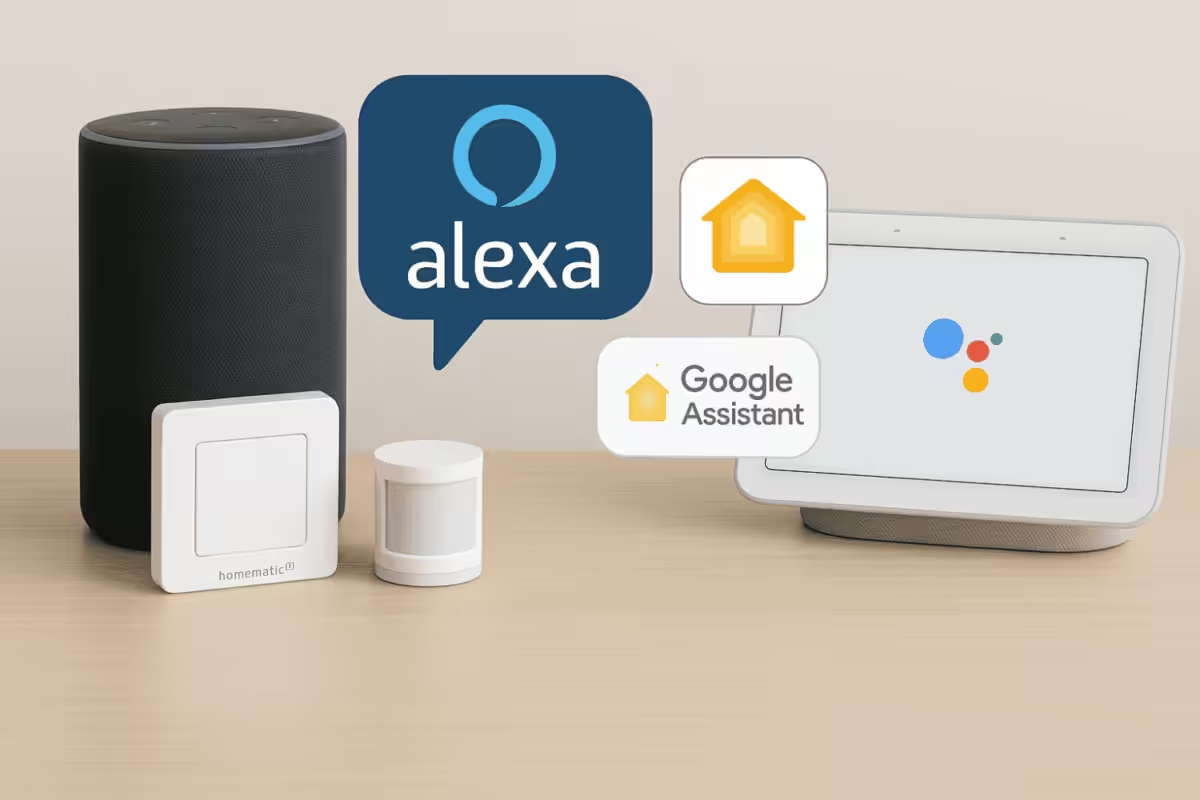
Voice assistants such as Amazon Alexa, Apple HomeKit (via Siri) and Google Assistant have become the most important interface between people and smart home systems in recent years. At the same time, artificial intelligence (AI) is becoming increasingly important, both for automations and for comfort in the connected home. Systems such as Homematic IP and Aqara are among the most popular solutions in German-speaking countries. This article examines the current state of integration, the role of AI and possible developments in the coming years.
Current state of voice assistant integration and AI
Homematic IP
Homematic IP is known as a closed but well-developed smart home system. Many components, such as smart radiator thermostats, shutter controls and security components for tasks such as setting up an alarm system, can be used together with voice assistants. Integration is provided through compatible gateways or third-party bridges that make Homematic devices accessible to Alexa, Siri or Google Assistant. For users, this means:
- Voice control for heating, lighting and shutters
- Integration into the routines and scenes of the respective voice assistants
- Use of standard commands such as “Alexa, set the temperature to 21 degrees”
Homematic IP particularly benefits from the fact that many users already own Alexa or Google devices, allowing them to start using voice control without additional hardware.
Aqara
Aqara offers particularly cost-effective sensors, hubs and actuators, ranging from door contacts and presence sensors to smart switches. Aqara’s voice assistant integration is more extensive and built directly into the system:
- Amazon Alexa: Almost the entire device range can be integrated.
- Apple HomeKit: Many Aqara hubs are HomeKit-certified, so sensors and actuators automatically appear in the Apple ecosystem.
- Google Assistant: Broad support for controls and scenes.
The hub acts as the central interface between local devices, the cloud and voice services.
Aqara offers particularly cost-effective sensors, hubs and actuators, ranging from door contacts and presence sensors to smart switches. Many Aqara devices are compatible with several platforms out of the box. Aqara hubs serve as translators between devices and voice assistants. The direct HomeKit integration of many devices is especially appealing, providing seamless support for the Apple ecosystem.
Practical advantages for users:
- wide selection of compatible sensors for motion, temperature and light
- reliable HomeKit connection for Siri control
- Alexa and Google Assistant integration through hubs or the cloud
This makes Aqara a very good choice for users looking for a flexible system that is easy to expand and supports several voice assistants.
The three major voice assistants at a glance
Amazon Alexa
Alexa is considered particularly flexible and supports a large number of smart home devices, automations and routines. Setup is straightforward for beginners, and voice commands are generally carried out reliably.
Apple HomeKit / Siri
Apple stands out above all for privacy, local processing and intuitive automations. HomeKit is the natural choice for users already deeply embedded in the Apple ecosystem. Commands such as “Hey Siri, turn on the bedroom light” work smoothly with many Aqara devices.
Google Assistant
Google Assistant is closely integrated with Android devices and also supports numerous smart home products. Its strength lies in flexible language models and effective integration into everyday life.
How AI and voice assistants work together
Voice assistants will increasingly merge with AI, and some of this can already be seen today:
- More natural voice requests instead of rigid commands:
Rather than requiring exact percentages, modern assistants already understand contextual descriptions such as
“Make the living-room lighting cosier” or “Dim the lights a little”. - AI-powered context analysis:
Voice assistants can interpret everyday statements such as “It is too warm in here” and trigger suitable actions, such as lowering the heating.
Modern systems already take user histories, preferred routines and typical times of day into account to understand and execute commands more effectively. Many assistants also combine device data, sensor readings or location information to suggest suitable actions. Their ability to recognise ambiguity continues to improve, allowing assistants to ask follow-up questions when a statement is unclear. Manufacturers are also increasingly developing models that analyse situations as a whole, including the indoor climate, lighting and occupancy, so that commands can be implemented more precisely.
Conclusion
Integrating Alexa, Apple HomeKit and Google Assistant with Homematic IP and Aqara already offers substantial practical benefits. Users can conveniently control essential functions such as heating, lighting, shutters and sensors by voice and include them in automations. While Homematic IP impresses with its solid infrastructure, Aqara stands out for its wide range of devices and strong HomeKit integration.
In the future, AI is likely to play a central role by analysing behaviour, independently generating automations and connecting devices across manufacturers, provided that privacy, standards and system openness allow this development.
💬 What would the ideal interaction between AI and voice assistants in your smart home look like?
Tell us in the comments which features you would like, which assistants you use and which challenges you currently face. Your experiences help other readers and will also inform future articles!
Source/photo: (Amazon / Aqara /Homematic IP)

Ich bin Christian und habe den Blog 2024 gegründet. Ich bin gelernter Kommunikationselektroniker, technikbegeistert und Smart-Home-Enthusiast mit langjähriger Erfahrung im Bereich vernetzter Haushaltsgeräte. Mit großer Leidenschaft verfolge ich aktuelle Entwicklungen und teste regelmäßig neue Produkte, um verständliche Einblicke und praxisnahe Empfehlungen zu geben.