Heat pumps are now considered the All-rounder of modern heating technology. They utilize free environmental energy, operate efficiently, are relatively inexpensive to run, and simultaneously make a significant contribution to climate protection. It's no wonder, then, that roughly every second new building is now equipped with a heat pump system – and the number continues to rise. Proper control is crucial for the efficient operation of heat pumps.
However convincing the idea of using nature as an energy source sounds, it is also important to note: A heat pump can only truly demonstrate its strengths if the entire heating system is optimally tailored to it. Homeowners and tenants often underestimate this crucial point. While older heating systems were primarily designed according to the motto "the bigger, the better," different rules apply to heat pumps.
Why consistent runtimes are so important
The heat pump is particularly efficient in operation when it long and consistent operating times Each start-up cycle requires a disproportionately large amount of electricity and puts additional strain on the equipment. Therefore, if the heat pump is constantly switching on and off – a behavior known as "cycling" – not only does energy consumption increase, but so does wear and tear. That's why it's crucial to operate heat pumps efficiently.
To avoid this, the generated heat must be continuously transferred to the heating system. Surface heating systems, such as underfloor heating, are actually ideal for this, as they can absorb large quantities of heated water. However, in practice, a problem arises: most underfloor heating systems operate according to a simple principle. „"Open-or-close principle"“. Either a heating circuit is fully open, or it is closed. This control via so-called thermal actuators quickly leads to the heat pump no longer being able to deliver its energy and having to cycle on and off frequently.
Motorized actuators provide optimal and efficient control of the underfloor heating.
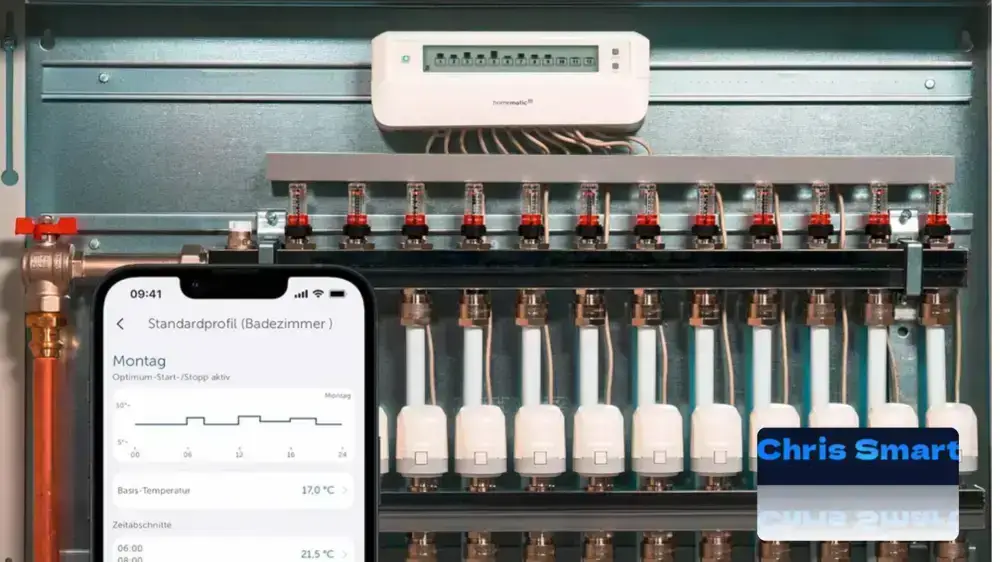
Offer a solution motorized actuators, which enable stepless control of the heating water. In combination with an intelligent Homematic IP underfloor heating controller The heat flow in the individual heating circuits can be controlled much more precisely. The controller is installed directly in the heating circuit manifold and takes over the complete control of the underfloor heating system.
Instead of simply opening or closing the heating circuits completely, the motorized actuators can precisely adjust their valve position. This creates a consistent flow, This not only provides greater living comfort but, above all, reduces the load on the heat pump. It needs to cycle less frequently and can modulate its heating output more effectively.
The Fraunhofer Institute for Energy Economics and Energy System Technology has leveraged this advantage within the framework of a Measurement campaign Confirmed: The results show that continuous control significantly reduces the cycling of the heat pump, which in turn increases its efficiency and extends its lifespan.
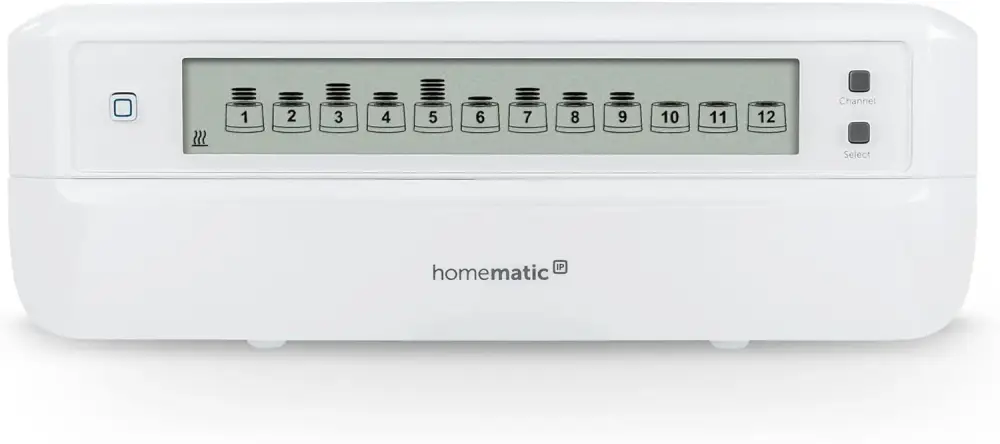
Homematic IP Smart Home underfloor heating controller –
12 channels, motorized, digital control of underfloor heating
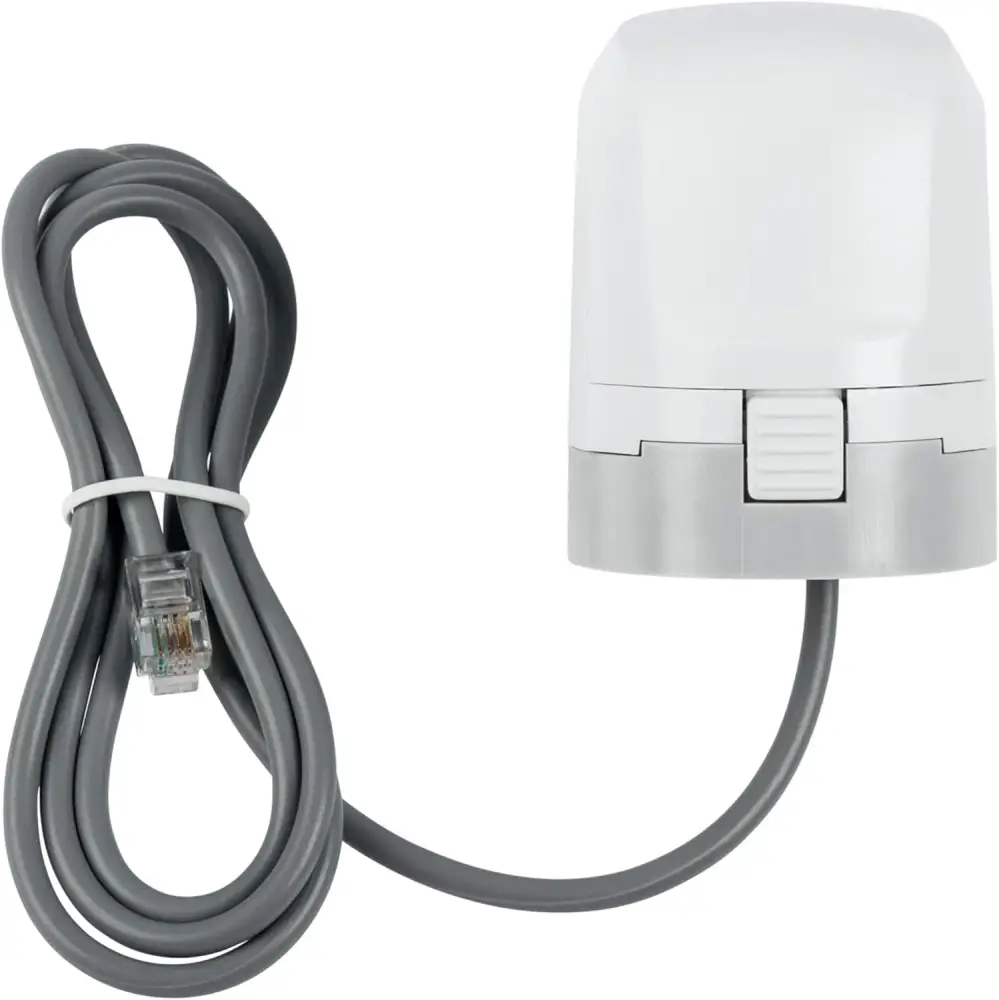
Homematic IP actuator for underfloor heating
Suitable for Homematic IP underfloor heating controllers
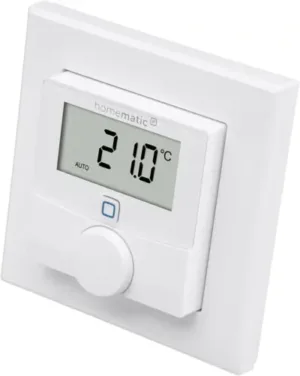
Homematic IP Smart Home Wall Thermostat
Humidity sensor, digital thermostat for radiators/underfloor heating
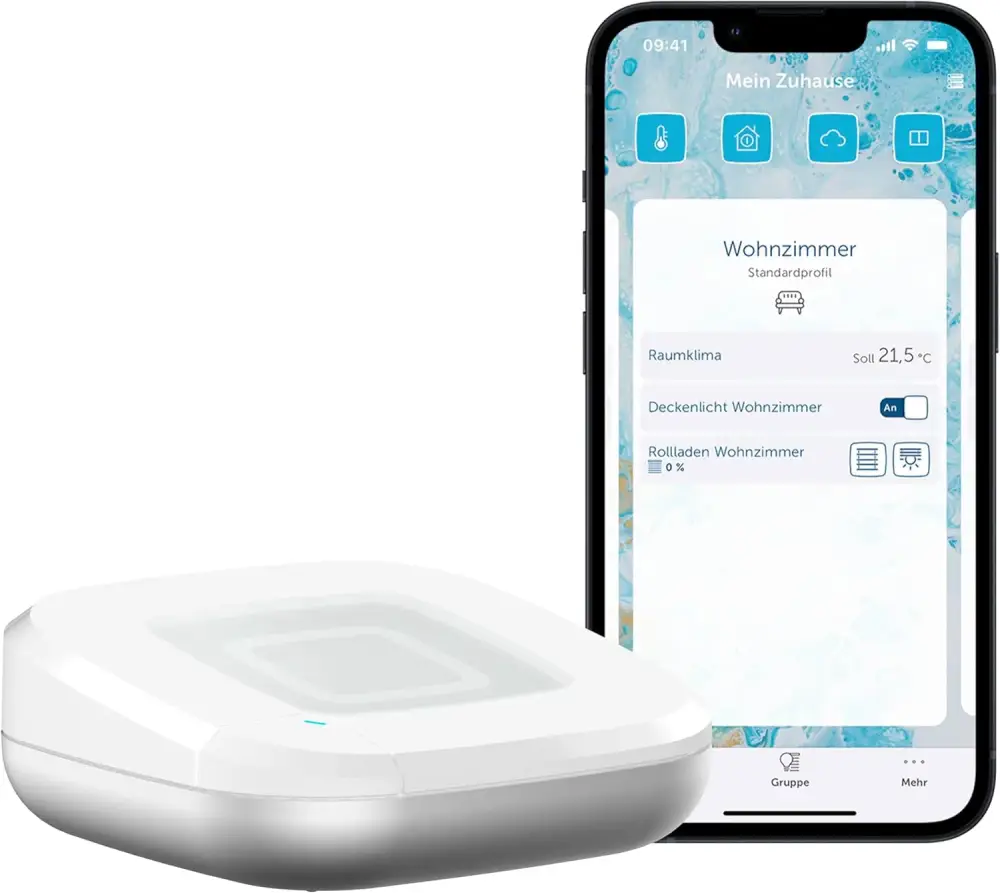
Homematic IP Access Point 2
Smart Home Gateway with free app and voice control via Amazon Alexa
To specifically improve the efficiency of the heating points
Another point that is often overlooked is the Flow temperature. For every increase in the flow temperature of one Kelvin, the efficiency of a heat pump decreases by up to 2.5 percent. This means that even a reduction of 10 degrees can result in energy savings of up to 25 percent.
The Homematic IP underfloor heating controller This also helps here, as it continuously displays the valve positions of the individual heating circuits. If the valves are not at their maximum setting, the flow temperature can be reduced without making the room uncomfortably hot. This not only makes the system more efficient but also saves money.
Integration and automation in the smart home
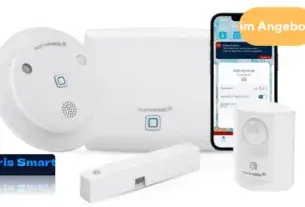
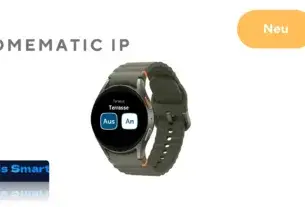
The whole process becomes even more comfortable and efficient when the heating control is part of a Smart home systems as is done by Homematic IP. Via a Homematic IP Central Unit or one Access Point The underfloor heating controller can be easily integrated and controlled locally or remotely via an app. Control via [method of control] is also possible. Smartwatch is also possible.
Each room can be equipped with individual heating profiles that vary depending on the time of day and day of the week. This ensures the bathroom is comfortably warm in the mornings and evenings, while the temperature is lowered during the day to save energy. Other components can also be integrated: roller shutters can close automatically to prevent heat loss or serve as sun protection in the summer. The heat pump itself can even be automatically switched to cooling mode when needed.
Technical background: How heat pumps work
The principle of a heat pump is similar to that of a refrigerator – only in reverse. A special refrigerant extracts heat from its surroundings, be it from the air, the ground, or groundwater. A compressor compresses the refrigerant, heating it considerably in the process. It then releases this heat to the heating system before cooling down again due to pressure reduction, and the cycle begins anew.
For the operation, the so-called heating curve The heating curve is crucial, as it regulates the flow temperature depending on the outside temperature. Two parameters play the main role here: the slope determines how much the flow temperature rises as the outside temperature drops, while the parallel shift determines the overall temperature level of the heating system. Precise adjustment of the heating curve is an important factor in keeping energy consumption low.
Conclusion
The heat pump is one of the most efficient and sustainable heating technologies of our time. However, it only fully realizes its advantages when combined with intelligent control technology, motorized actuators, and a smart underfloor heating controller. More consistent operating times, lower flow temperatures, and the ability to integrate the entire system into a smart home result in greater efficiency, increased comfort, and reduced costs.
Glossary of heat pump technology
Output temperature / Flow temperature
The temperature at which the heating water is fed from the heat generator (e.g., heat pump) into the heating system. A lower flow temperature increases the efficiency of the heat pump.
Underfloor heating
Underfloor heating, where warm water flows through pipes laid in the floor. It distributes heat evenly and operates with low flow temperatures – ideal for heat pumps.
heating curve
A setting in the heating control system that specifies how the flow temperature changes depending on the outside temperature. Energy consumption can be optimized by adjusting the slope and parallel shift of this setting.
Underfloor heating controller
An intelligent Homematic IP underfloor heating controller*, which can control up to 12 motorized actuators. It optimizes heat distribution, prevents cycling, and increases the efficiency of the heat pump.
Hydraulic balancing
A method to ensure that each heating circuit receives precisely the right amount of heating water. Without balancing, some rooms will be too warm and others too cold, wasting energy.
Annual Performance Factor (APF)
A key performance indicator (KPI) for the efficiency of a heat pump. It is calculated as the ratio of heat output to electricity input. For example, a COP of 4 means that 1 kWh of electricity produces 4 kWh of heat.
Refrigerant
A liquid with special thermodynamic properties that absorbs heat from the environment in the heat pump, evaporates, compresses, and then releases it as heat to the heating system.
Motorized actuator
A small electric motor drive that can continuously regulate the valve position in a heating circuit. This allows for precise control of the flow rate of the heating water.
beats
Frequent switching on and off of the heat pump is inefficient, increases electricity consumption, and shortens the lifespan of the device.
Thermal actuator
A simple actuator for heating circuit valves that operates on an "on or off" principle. It cannot finely regulate the valve position and therefore often leads to cycling problems in heat pumps.
Flow temperature
The temperature of the heating water that is pumped into the heating circuits by the heat pump. Lower values significantly improve efficiency.
heat pump
A heating system that uses approximately 75 TW of environmental energy (from air, earth, or water) and around 25 TW of electrical energy to provide heat. Its operating principle is similar to a refrigerator, but in reverse.
Source/Photo: (Amazon / Homematic IP)

My name is Christian, and I founded this blog in 2024. I'm a trained communications electronics technician, a tech enthusiast, and a smart home aficionado with many years of experience in the field of networked household appliances. I passionately follow current developments and regularly test new products to provide clear insights and practical recommendations.