With Home Assistant 2026.5, the Open Home Foundation is releasing one of the most extensive updates in recent times. The release not only brings numerous improvements to dashboards and automations, but also opens Home Assistant up more than ever to conventional radio technology and older generations of hardware. Existing devices should remain usable, while the user interface becomes more modern and configuration easier.
Home Assistant embraces conventional radio technology
Probably the most important new feature in Home Assistant 2026.5 is the introduction of native support for radio frequency (RF). While Home Assistant has previously focused primarily on modern smart home standards such as Zigbee, Z-Wave and Matter, conventional radio devices can now be integrated much more easily. These include:
- 433 MHz wireless sockets
- older roller shutter controllers
- radio remote controls
- older smart home components
At launch, this is implemented through two integrations:
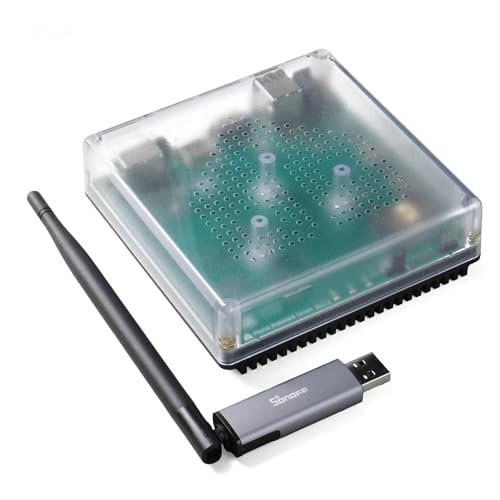
- ESPHome combined with suitable radio modules for the 315, 433, 868 and 915 MHz frequency bands. For DIY projects, Home Assistant recommends the well-known CC1101 radio module*, among others.
- The Broadlink RM4 Pro* is also supported as a ready-made complete solution. It already has an integrated 433 MHz transmitter and receiver.
The project’s strategic direction is particularly interesting: following the introduction of infrared support in the 2026.4 release, support is now being added specifically for legacy hardware. According to the release notes, this is also intended to pave the way for future hardware products from Nabu Casa*.
Serial-over-IP with ESPHome
Another technically exciting addition is support for serial interfaces over the network via ESPHome. This means that serial devices can be connected in a decentralised way and linked to Home Assistant over Wi-Fi, for example. Until now, many serial devices required a direct cable connection. The new solution allows such devices to be integrated much more flexibly into existing installations. This should be especially useful for heating controllers or smart meters, which are often installed in the basement.
New maintenance dashboard
Home Assistant 2026.5 also introduces a new integrated maintenance dashboard. It automatically identifies devices that require maintenance and displays their status in one central place.

The current focus is primarily on the battery levels of sensors that do not have a permanent power supply. In larger systems with many different sensors, battery management has often been fragmented and required custom dashboards to keep track of their status. The new maintenance dashboard significantly reduces this effort.
Security dashboard gains a live activity view
The security dashboard has also been expanded with new features. A new integrated activity sidebar displays security events in real time.

These events include window and door sensors, motion detectors, door locks and movement detected by cameras. As a result, Home Assistant is increasingly evolving from a system purely for automations into a fully fledged security solution.
New shortcut card
One of the most visible additions is a new card that can display various shortcuts. It can be used to navigate to dashboards, areas or device views, trigger actions, start the voice assistant or link to external URLs.

This makes many previously necessary custom and complex solutions obsolete. Especially on mobile dashboards, the new card enables much faster and clearer interaction concepts.
Conclusion: Home Assistant 2026.5
Home Assistant 2026.5 clearly shows where the project is heading: more modern dashboards and better support for existing hardware. Native RF support and the Serial-over-IP features in particular could have an enormous long-term impact, because they make it much easier to integrate older generations of devices into modern smart home systems.
Source/Photo: (Chris Smart / Amazon / Home Assistant )





Ich bin Christian und habe den Blog 2024 gegründet. Ich bin gelernter Kommunikationselektroniker, technikbegeistert und Smart-Home-Enthusiast mit langjähriger Erfahrung im Bereich vernetzter Haushaltsgeräte. Mit großer Leidenschaft verfolge ich aktuelle Entwicklungen und teste regelmäßig neue Produkte, um verständliche Einblicke und praxisnahe Empfehlungen zu geben.