
In a world where the security of one's own home plays an increasingly important role, Homematic IP A smart solution to effectively protect your home. Home alarm system and apartment, which is based on Homematic IP, offers you tailored protection and integrates seamlessly into Your own four walls integrate.
In this article, we will show you how to create a reliable [product/service] step by step. Alarm system in the house and apartment Build your home with components from Homematic IP and thus ensure greater security in your home.
💡 Do you have questions about setting up your alarm system or are you facing a specific challenge? Ask your question in the comments below – we're happy to help!
Basics of a Homematic IP alarm system
Before we go into the details, let's clarify some basics. An alarm system typically consists of... Sensors, which detect unwanted events – such as the opening of windows or doors – as well as from a Headquarters, which processes the information from the sensors and according to the configuration Alarm device targets systems that react in the event of an incident.
Homematic IP offers a wide range of devices that allow you to individually configure your own security system. This creates a flexible alarm system, which perfectly suits your needs.
Core components of a Homematic IP alarm system
Central unit (Access Point or CCU3)
A central hub can be Homematic IP Access Point can be used – there are two models: the Homematic IP Access Point* and the Homematic IP WLAN access point*.
With these options, the processing and control of your smart home is handled via Homematic's servers. Therefore, an internet connection is required to use the full range of functions. Configuration and control are conveniently done via the... Homematic IP App, which is available for both Apple and Android devices. The difference between the two models lies in the type of internet connection – either via LAN or WLAN.
Alternatively, you have the option of Homematic Smart Home Central CCU3 (Central Control Unit 3) It is available. It operates independently and does not require an internet connection to perform control functions. This makes it a stable and privacy-friendly platform for complex smart home systems.
💡 Tip: You can find detailed help on selecting the right access point or CCU3 here. here.
Window and door sensors
One of the most important components of your Alarm system are the Window and door sensors. These detect when windows and doors are opened and communicate with the Homematic IP central unit.
The Alarm system for windows and doors This ensures that a notification or alarm is triggered immediately in the event of unexpected activity. Additionally, the sensors can be integrated into other scenarios – such as automatic heating or lighting control.
This will not only create more security, but also additional comfort in your home.
Window and door contact – magnet
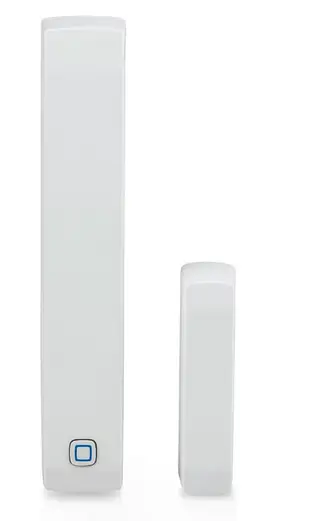
Homematic IP Smart Home window and door contact with magnet
Digital sensor for efficient heating, window monitoring via app, energy saving, Alexa, Google Assistant
Window and door contact – optical
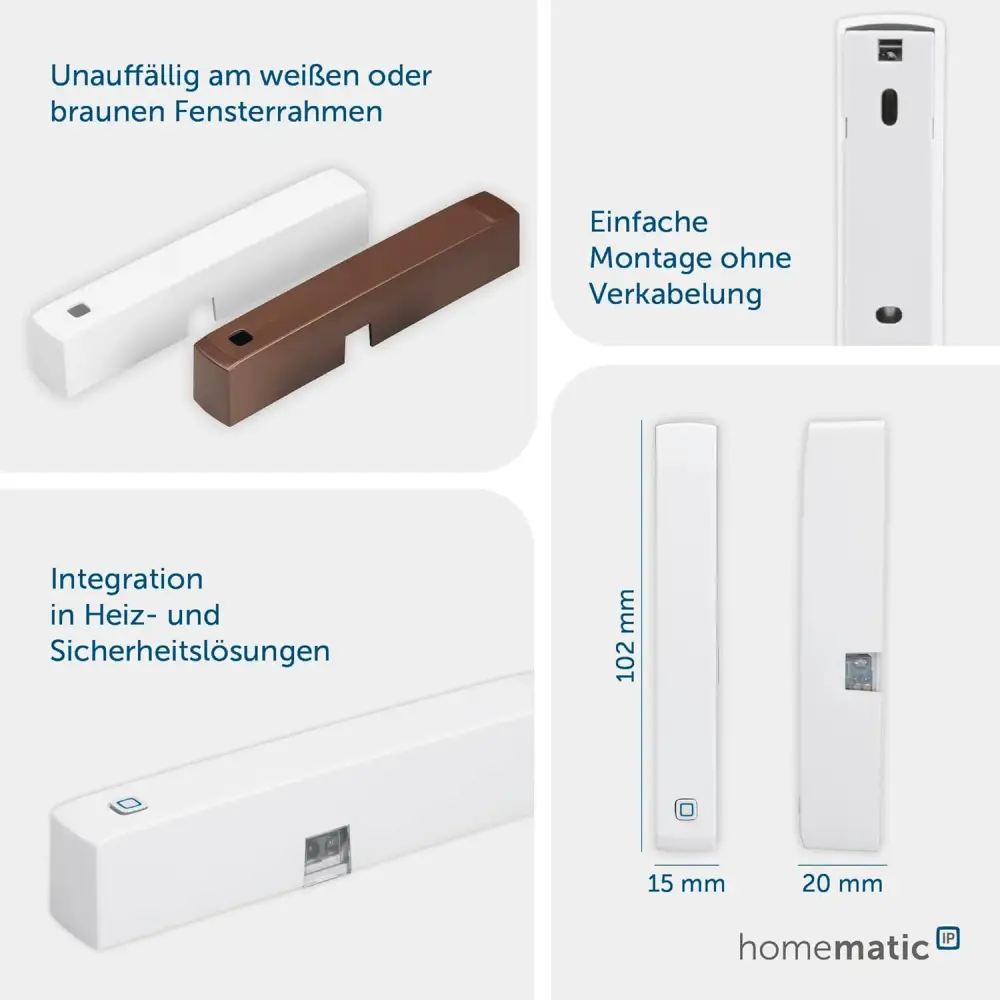
Homematic IP Smart Home Window and Door Contact
Optical, white + brown cover, digital sensor, efficient heating, window monitoring via app, energy saving, Alexa, Google Assistant
Homematic IP window and door contact – concealed installation
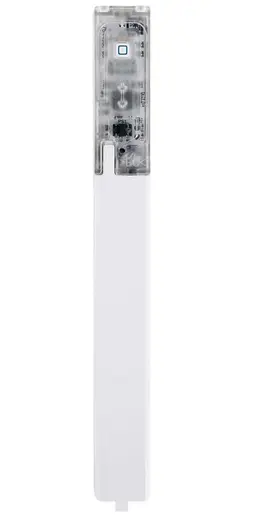
Homematic IP Smart Home window and door contact – concealed installation
Digital sensor for efficient heating, window monitoring via app, energy saving, Alexa, Google Assistant
Homematic IP Window and Door Contact – Window Handle Sensor
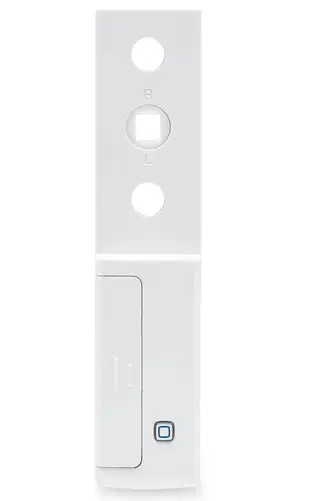
Homematic IP Smart Home window handle sensor, white cover
Digital sensor for efficient heating, window monitoring via app, energy saving
Homematic IP Smart Home Tilt and Vibration Sensor
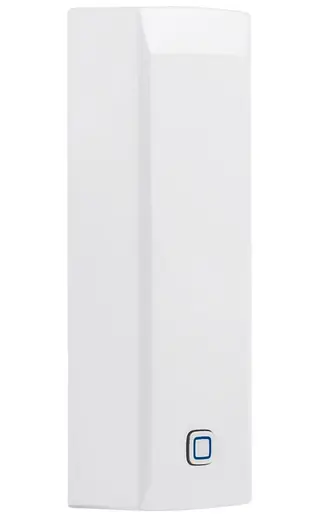
Homematic IP Smart Home Tilt and Vibration Sensor
The compact sensor detects changes in position or vibrations and can perform a variety of tasks in the smart home.
motion detector
Another important component of every Alarm system in the house are motion detector. They react to movements within defined areas and immediately trigger an alarm in case of unauthorized access. Homematic IP offers both Indoor motion detector as well as Outdoor motion detector, which have a long range and are weather-resistant. This allows you to specifically monitor what is happening around your house.
Alarm sirens
One Alarm siren is the heart of every Alarm system in the house and apartment It deters burglars and alerts neighbors in case of emergency. Homematic IP offers both Indoor sirens as well as Outdoor sirens, which send acoustic and optical signals. In combination with the sensors for Windows and doors This creates a completely secure system that reacts immediately when a break-in attempt is detected.
App control and notifications
One of the biggest advantages of a Homematic IP alarm system is the convenient control via the Homematic IP App. You can Alarm system Activate or deactivate sensors at any time, view the status of all sensors, and receive immediate notifications if anything unusual happens. Whether on vacation, in the office, or on the go – with the app, you can always keep an eye on your home.
Expansion options for Homematic IP
A Homematic IP Home alarm system and apartment It can be flexibly expanded. In addition to the classic sensors and sirens, you can also... Smoke detector, Water detector, Lighting systems or Surveillance cameras Integrate it. This will make your smart home not only more secure, but also more comfortable and energy-efficient. This creates a holistic system. Alarm system which is perfectly tailored to your needs.
FAQs – Answers to frequently asked questions
What do you need for a Homematic IP alarm system in your house?
For a Homematic IP alarm system in your home, you need at least a central unit (Access Point or CCU3), window and door sensors, and a siren. Motion detectors and the Homematic IP app for control and monitoring are also recommended. Depending on the size of your house, additional sensors can be added.
How secure are Homematic IP alarm systems?
Homematic IP alarm systems are highly secure thanks to modern encryption technologies. Communication between the devices and the control unit is encrypted, and attempted break-ins are reliably reported via optional cloud connectivity and app notifications. With the CCU3, even completely local operation is possible.
Can a Homematic IP alarm system be operated without internet access?
Yes — the alarm system works with the Homematic IP CCU3 locally without an internet connection. The access point, however, requires an internet connection for control and notifications via the cloud/app to function. For maximum independence, the CCU3 variant is therefore recommended.
How do I secure windows and doors with Homematic IP?
Windows and doors are fitted with special Homematic IP window and door contacts Secured. These devices detect when a door or window is opened and immediately report it to the control panel. In combination with sirens and motion detectors, this creates a reliable alarm system for the house, windows, and doors.
Is the Homematic IP alarm system expandable?
Yes, the system is modular. You can add additional components at any time, such as motion detectors, outdoor sirens, smoke and water detectors, or cameras from other manufacturers. This allows your home alarm system to grow with your security needs.
How much does a Homematic IP alarm system cost?
The costs depend on the scope of the system. A basic installation with a control unit, door/window sensors, and a siren usually starts at around €200–400. For a complete system with multiple sensors, motion detectors, and sirens, €600–1,200 is realistic—depending on the size of the house and the desired level of security.
Can I install the Homematic IP alarm system myself?
Yes, the installation is suitable for beginners. The components can be easily installed and connected via app or central unit. However, for more complex systems or larger houses, professional support may be worthwhile.
Source/Photo: (Homematic IP/Amazon)

My name is Christian, and I founded this blog in 2024. I'm a trained communications electronics technician, a tech enthusiast, and a smart home aficionado with many years of experience in the field of networked household appliances. I passionately follow current developments and regularly test new products to provide clear insights and practical recommendations.