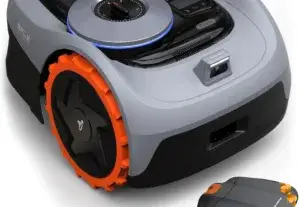
In 2024, Segway introduced the Navimow i105E, one of the most interesting entry-level robotic lawnmowers without boundary wires. Its price-performance ratio, easy installation, and stable navigation quickly made it popular. Now, the i205 AWD, a successor with significantly improved technology, has been released. At first glance, the two models appear similar. However, the Navimow i105E and the new i205 AWD differ technically in several key aspects – from the chassis and navigation to maintenance.
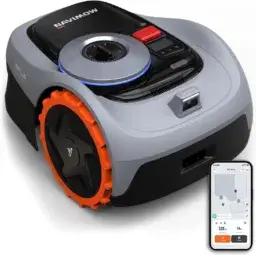
Navimow i105E robotic lawnmower
Without boundary wire with RTK antenna. Max. area up to 600 m²
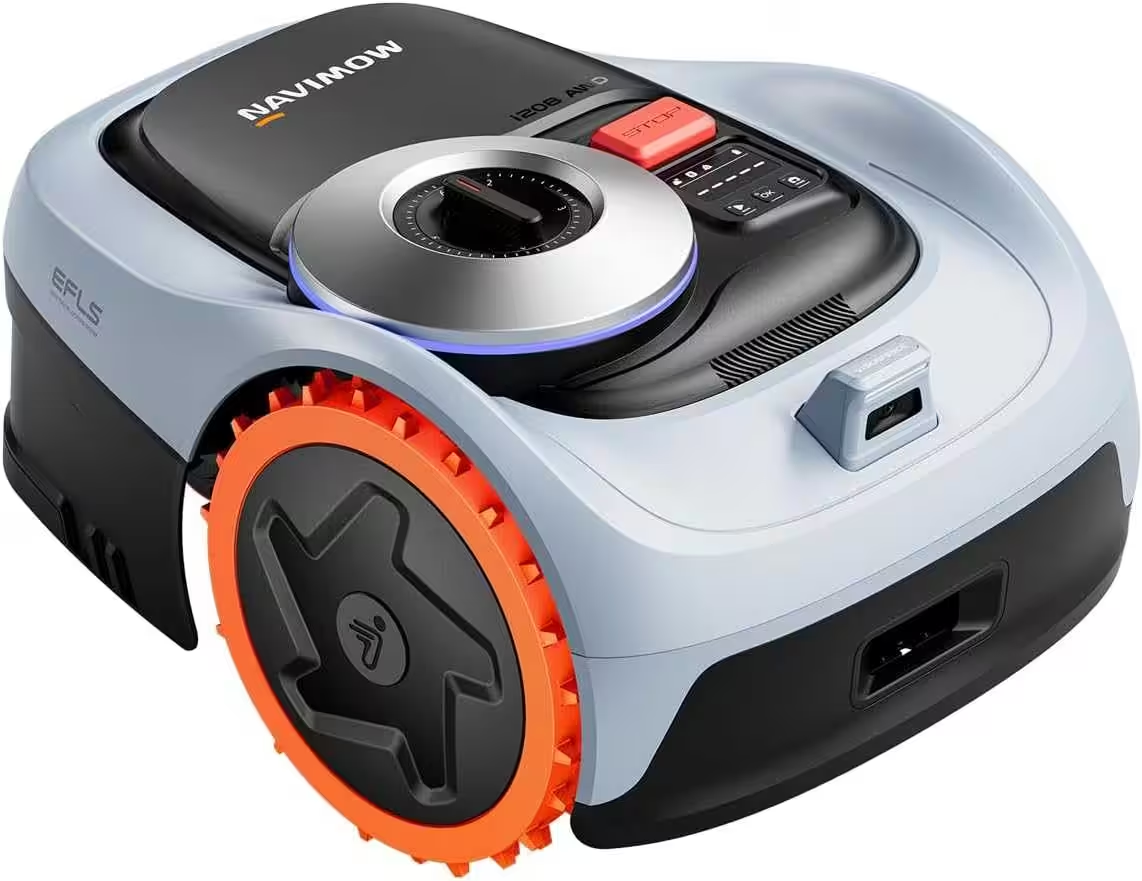
Navimow i205 AWD
Navimow i205 AWD robotic lawnmower without boundary wire, Recommended 500 m², All-wheel drive for gradients up to 45%, EFLS NRTK + Vision, optical RTK antenna
Navimow i208 AWD
Navimow i205 AWD robotic lawnmower without boundary wire, Recommended 800 m², All-wheel drive for gradients up to 45%, EFLS NRTK + Vision, optical RTK antenna
The i105E: A powerful entry into wireless robotic lawnmowers
I personally use a Navimow i105E and am very impressed with this robotic lawnmower. I particularly like its reliable navigation, excellent obstacle detection, and easy setup without a boundary wire. Despite its relatively low price, the mower performs surprisingly precisely in everyday use and has a powerful cutting mechanism. The i105E is clearly designed for small to medium-sized properties with relatively simple garden layouts and slopes.
Front-wheel drive versus all-wheel drive
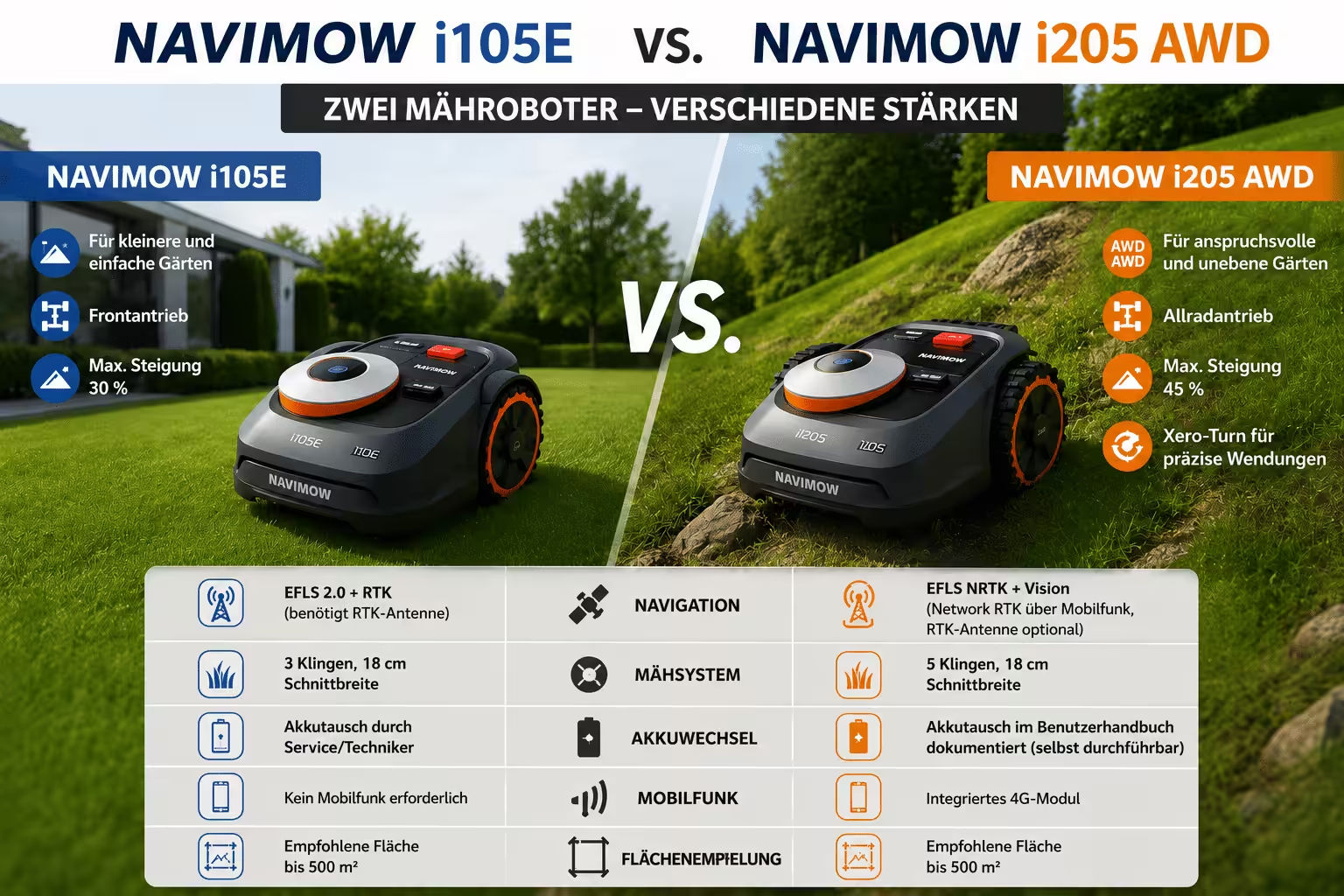
The biggest difference between the two models lies in the chassis. While the Navimow i105E uses a classic front-wheel drive system with the two rear wheels simply pulled along, the new i205 AWD has an all-wheel drive system with a driven and steerable rear axle.
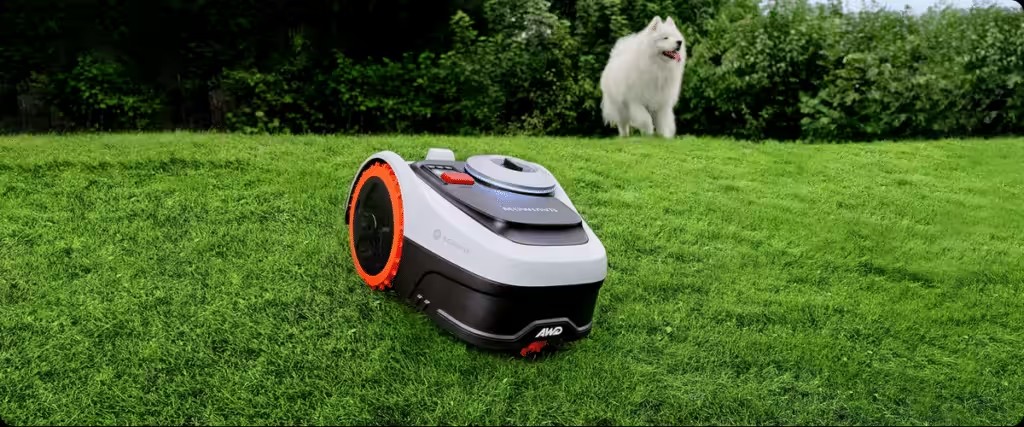
This significantly improves traction, especially on wet surfaces, uneven terrain, or inclines. Segway specifies a maximum incline of 30° (%) for the i105E. For the i205 AWD, this value increases to up to 45° (%). This makes a noticeable difference, particularly on slopes or difficult terrain. Additionally, the i205 AWD utilizes Xero-Turn technology for more precise turning maneuvers.
Navigation: RTK remains, but will become more flexible
The two models also differ significantly in their navigation systems. The i105E uses EFLS 2.0 and a conventional external RTK antenna. This antenna is essential for precise positioning and is an integral part of the system.
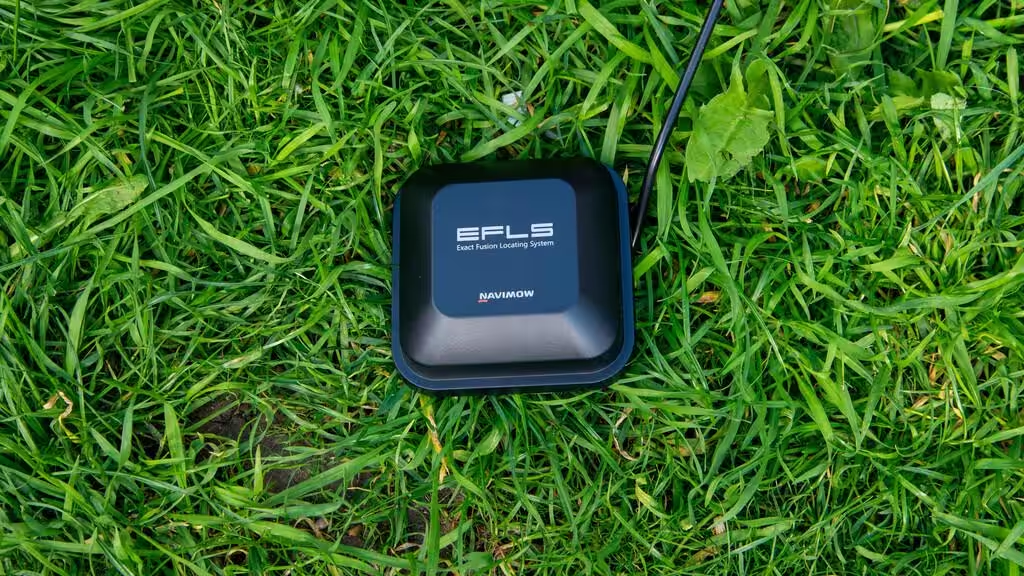
In contrast, Segway uses EFLS NRTK ("Network RTK") for the new i205 AWD. The correction data is transmitted via the mobile network by default. This means the robotic lawnmower can, in principle, operate even without a locally installed RTK antenna.
A GNSS/RTK antenna is still included with the i205 AWD and can be used optionally – for example, in difficult reception conditions or limited mobile network coverage. This makes the i205 AWD a more flexible navigation solution than the i105E.
Differences in the mowing system
The actual cutting system of the two models differs more than initially suspected. Both the Navimow i105E and the i205 AWD use a floating blade plate with freely moving blades and a cutting width of 18 cm. However, Segway uses a different system for the i205 AWD. i105E on three blades, while the new i205 AWD with five blades works.
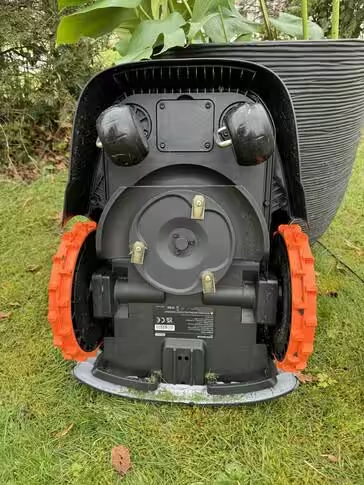
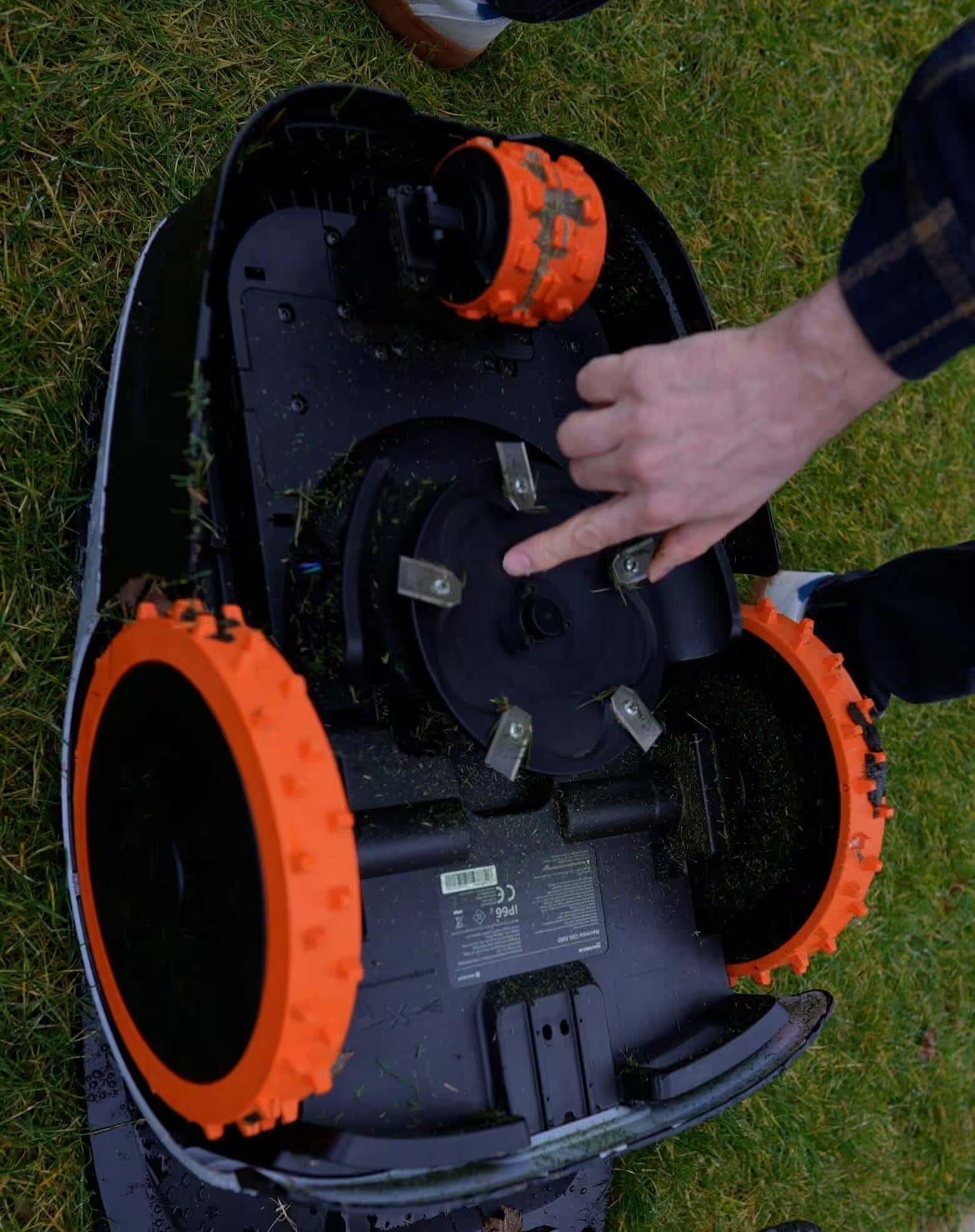
The higher number of blades ensures that more blades of grass are captured per pass. This results in a finer cut and the clippings fall more evenly onto the lawn, thus mulching more effectively.
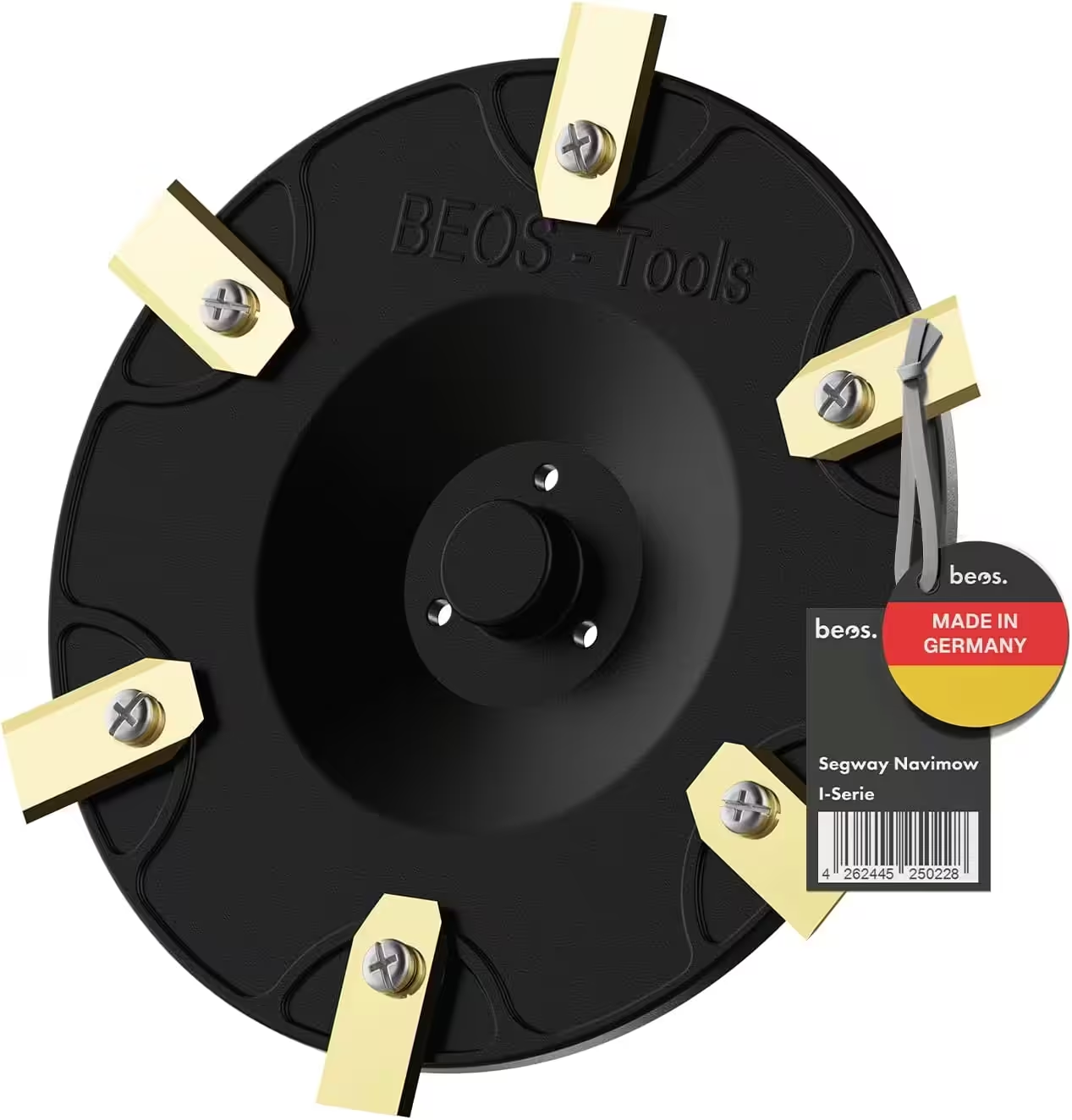
6-piece cutting disc
Compatible with Segway Navimow i105E, i108E
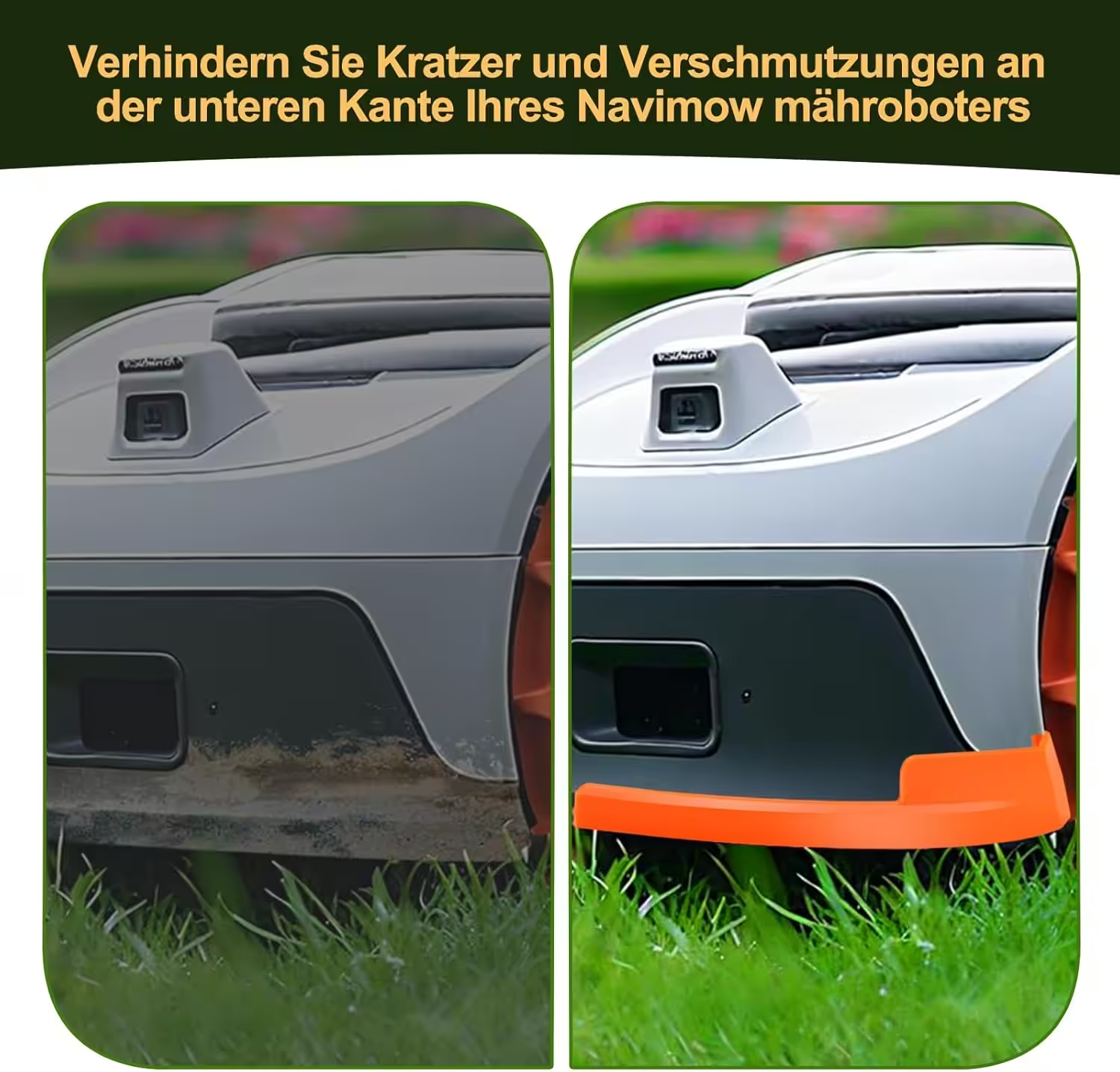
Edge protection for Segway Navimow
Compatible with robotic lawnmowers i105e & i108e, i205 & i208 AWD protection – simply plug in, no gluing required

30-piece set of premium robotic lawnmower blades
Replacement blades compatible with Segway Navimow i Series
Alternative blade trays with a higher number of blades are now available for the i105E from accessory manufacturers. Some of these use five or more blades. However, these systems are not part of the official Segway product range.
Maintenance and battery replacement
Another interesting difference lies in the area of maintenance. The user manual for the Navimow i105 describes battery replacement as a task for professional technicians or customer service. Direct battery replacement by the user is not provided for.
In contrast, Segway documents the battery removal process for the new i205 AWD directly in the user manual. This includes instructions for opening the battery compartment, disconnecting the plugs, and replacing the battery. This is a particularly interesting difference between the two model generations, especially with regard to long-term maintenance and repairs.
Turbogrün lawn fertilizer spring
Healthy lawn suppresses moss, ideal for spring and summer, suitable for spreaders, low-dust granules
Technical comparison
Navimow i105E |
Navimow i205 AWD |
|
|---|---|---|
| Recommended mowing area | 500 m² | 500 m² |
| Noise level (LWA) | 58 dB(A) | 59 dB(A) |
| Max. gradient (working range) | 30 % | 45 % |
| navigation | EFLS 2.0 + RTK | EFLS NRTK + Vision |
| Standard knives | 3 blades | 5 blades |
| Battery replacement | Service provided | documented in the manual |
Conclusion
The Navimow i205 AWD is technically much more than just a simple evolution of the i105E. Its all-wheel drive, more flexible navigation with Network-RTK, and documented battery maintenance options clearly distinguish it from its predecessor. The i105E remains an attractive robotic lawnmower for smaller and simpler properties. However, for those seeking steeper slopes, challenging terrain, or a more advanced platform, the i205 AWD offers a technically superior solution.
Navimow i105E robotic lawnmower
Without boundary wire with RTK antenna. Max. area up to 600 m²
Navimow i205 AWD
Navimow i205 AWD robotic lawnmower without boundary wire, Recommended 500 m², All-wheel drive for gradients up to 45%, EFLS NRTK + Vision, No RTK antenna
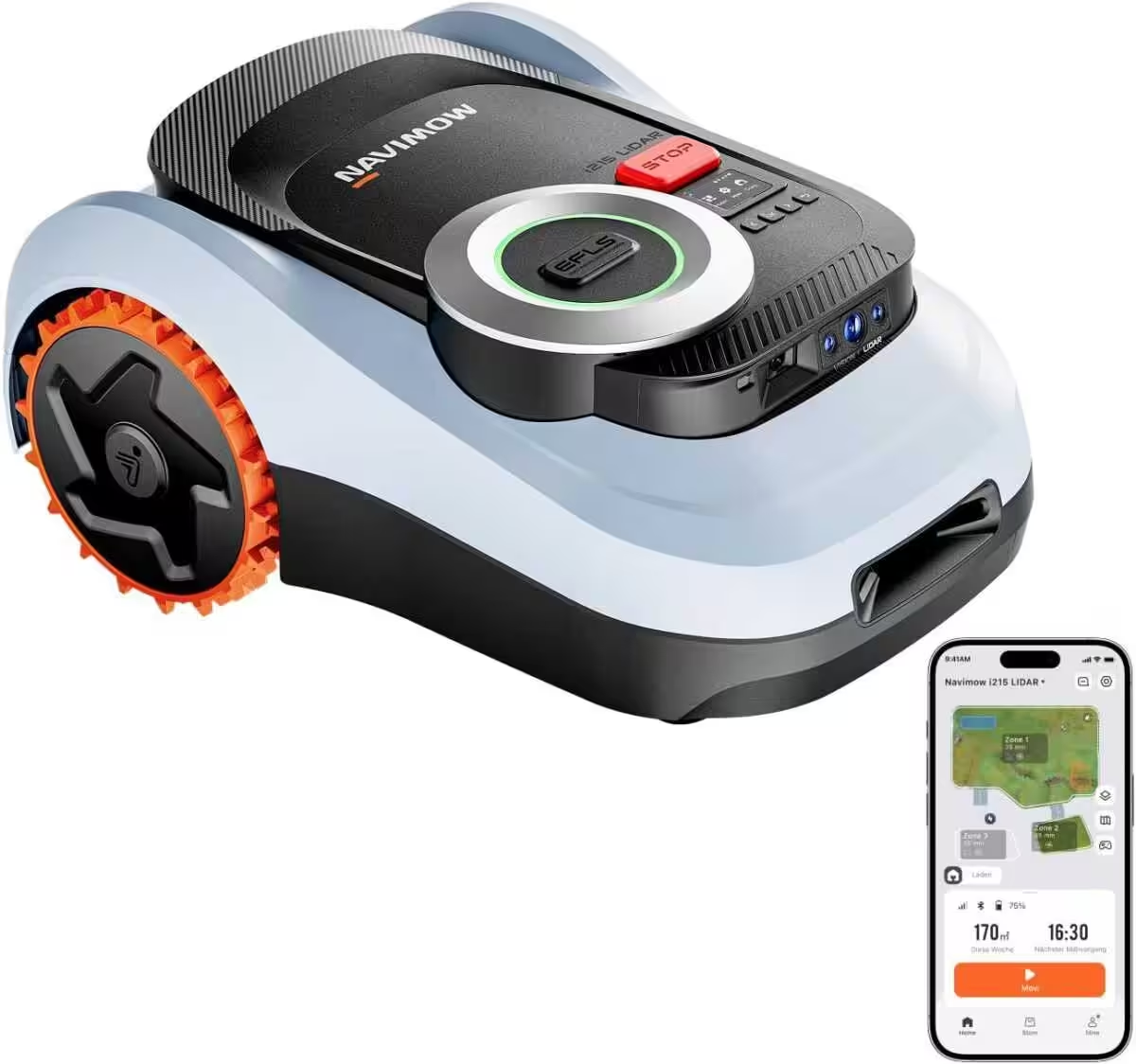
Navimow i208 LiDAR
Robotic lawnmower without boundary wire for
800 m², Off-road tires for slopes up to 45% incline, LiDAR and Vision Dual System, without wires or antenna
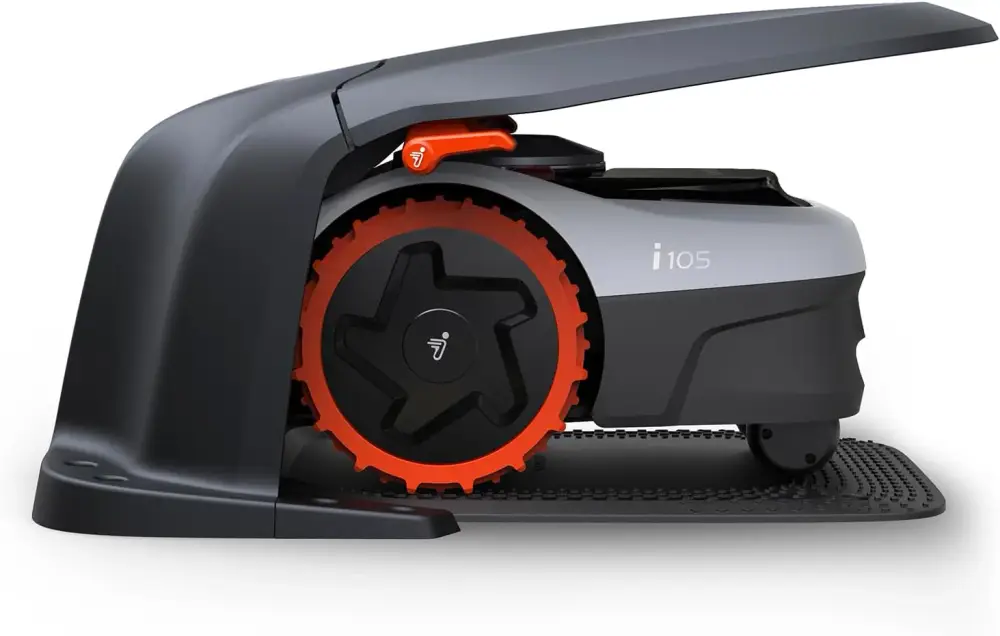
Navimow Garage S
Foldable, no signal blockage, protection from sun and rain, accessory for robotic lawnmowers Navimow i105E, i108E, i205 AWD, i208 AWD
30-piece set of premium robotic lawnmower blades
Replacement blades compatible with Segway Navimow i Series
Turbogrün lawn fertilizer spring
Healthy lawn suppresses moss, ideal for spring and summer, suitable for spreaders, low-dust granules
Source/Photo: (Image generator / trustedreviews / Navimov /Amazon/ notebookcheck)

My name is Christian, and I founded this blog in 2024. I'm a trained communications electronics technician, a tech enthusiast, and a smart home aficionado with many years of experience in the field of networked household appliances. I passionately follow current developments and regularly test new products to provide clear insights and practical recommendations.